Concrete Jacking & Slab Leveling
Raise and stabilize uneven concrete slabs without full replacement.
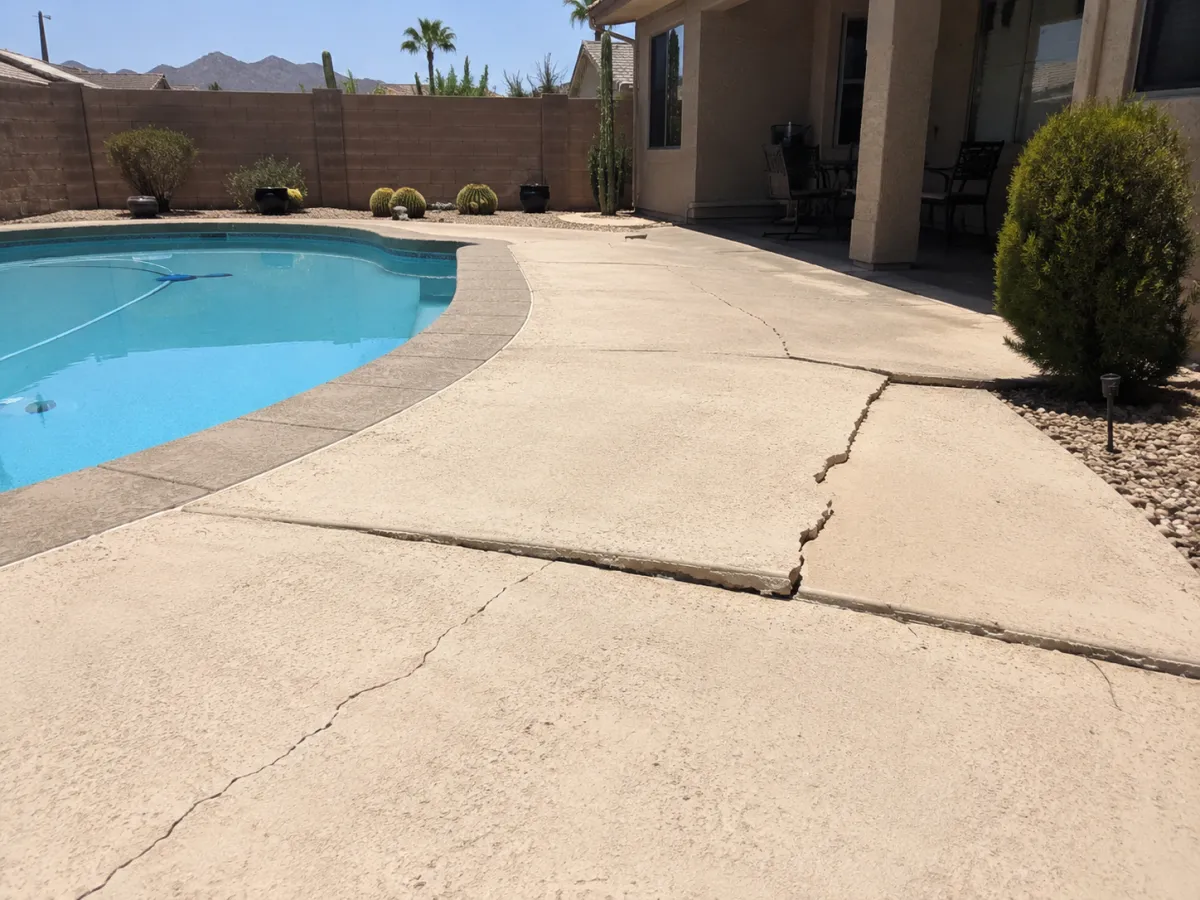
Concrete jacking is commonly used to lift and stabilize sunken or uneven concrete slabs caused by settlement, erosion, moisture changes, poor compaction, and shifting soil conditions.
Property owners often research concrete jacking for uneven patios, pool decks, sidewalks, driveways, walkways, garage floors, and separated slab sections.
Concrete jacking methods may help improve safety, drainage, curb appeal, and walking surfaces without tearing out and replacing the entire slab.
Concrete jacking is commonly used to restore:
Uneven patios
Sunken pool decks
Settled sidewalks
Driveway slab movement
Garage floor settlement
Walkway trip hazards
Separated concrete slabs
Poolside drainage issues
Backyard concrete settlement
Concrete jacking may help restore existing concrete surfaces faster and with less disruption than removing and repouring slabs, depending on the condition of the concrete.
Concrete Jacking vs Mudjacking vs Slabjacking
Concrete jacking, slabjacking, and mudjacking are related terms used to describe methods for raising settled concrete slabs.
Mudjacking traditionally refers to pumping a cement-based slurry beneath a slab. Slabjacking is a broader term for lifting concrete back toward a more even position. Concrete jacking is commonly used by property owners searching for ways to repair sunken or uneven concrete without full replacement.
The right repair approach depends on the slab condition, amount of settlement, drainage issues, and the cause of the movement.
Why Concrete Slabs Crack & Settle in Arizona
Concrete slabs are constantly exposed to Arizona heat, soil movement, moisture changes, erosion, and long-term settlement. Over time, these conditions can cause patios, sidewalks, pool decks, driveways, and walkways to sink, separate, or crack.
When support beneath the slab changes, the concrete above it may move out of position and create uneven surfaces, drainage problems, and trip hazards.
Common causes include:
Expansive Arizona soils
Water erosion beneath slabs
Poor soil compaction
Drainage problems
Pool water runoff
Long-term settlement
Seasonal expansion and contraction
Addressing settlement early may help reduce safety concerns and prevent uneven concrete from becoming a larger repair issue.
Got Questions? We’ve Got Answers.
Common questions about concrete jacking, slabjacking, mudjacking, and uneven concrete repair.
What is concrete jacking?
Concrete jacking refers to methods used to raise and stabilize sunken or uneven concrete slabs caused by settlement, erosion, moisture changes, or shifting soil conditions.
Is concrete jacking the same as mudjacking?
Mudjacking is one type of concrete jacking. The term usually refers to lifting concrete by pumping a cement-based slurry beneath the slab. Concrete jacking is a broader term used for raising settled slabs.
What is slabjacking?
Slabjacking is another term for lifting a settled concrete slab back toward a more even position. It is commonly used for sidewalks, patios, driveways, pool decks, and other concrete surfaces.
Can cracked pool decks be repaired without replacing them?
In many cases, yes. If the concrete is still mostly intact, concrete jacking or leveling may help restore stability and reduce uneven surfaces without replacing the entire slab.
Is concrete jacking cheaper than replacement?
Concrete jacking is often less expensive than full replacement because the existing slab may be restored instead of demolished and repoured.
When should concrete be replaced instead of jacked?
Replacement may be needed when concrete is severely cracked, crumbling, badly deteriorated, or no longer structurally sound.
Need more specific answers? Contact us and our team will answer all your questions.
Paradise Valley, AZ 85032
[email protected]
(623) 220-0442
Availability:
Mon - Fri - Call for an Appointment
Sat/Sun - (Closed)
Your Concrete Deserves Support.